
Industrial vacuum technology
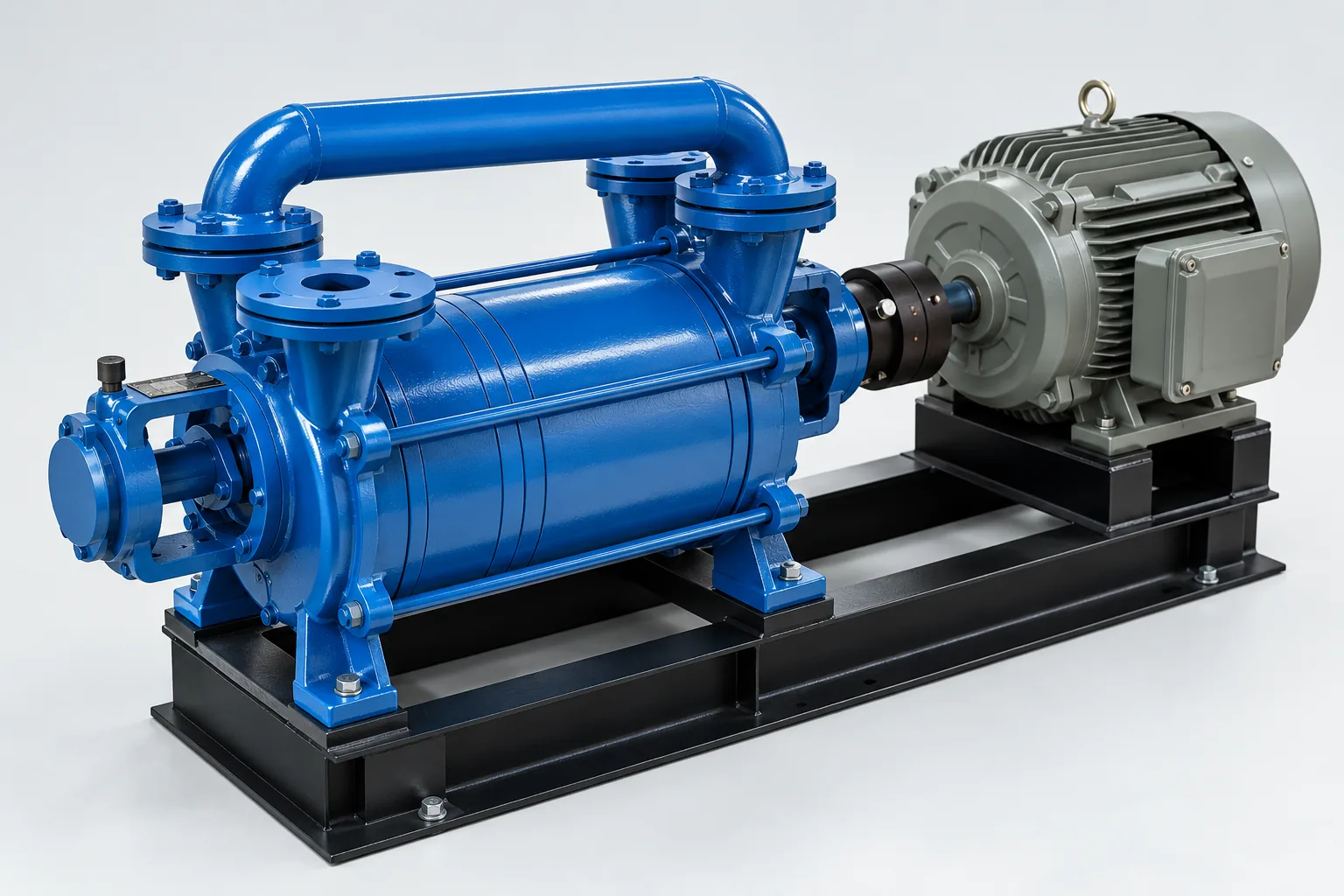
Titan Liquid Ring Vacuum Pumps
Industrial vacuum pumps, spare parts and repair support in South Africa.
Process Containment Solutions (PCS) supports Titan single-stage and two-stage liquid ring vacuum pump requirements. Equipment selection depends on the operating duty, process conditions and application. Speak to the PCS technical team about new equipment, spare parts or repair requirements.
Operating principle
How liquid ring vacuum pumps work
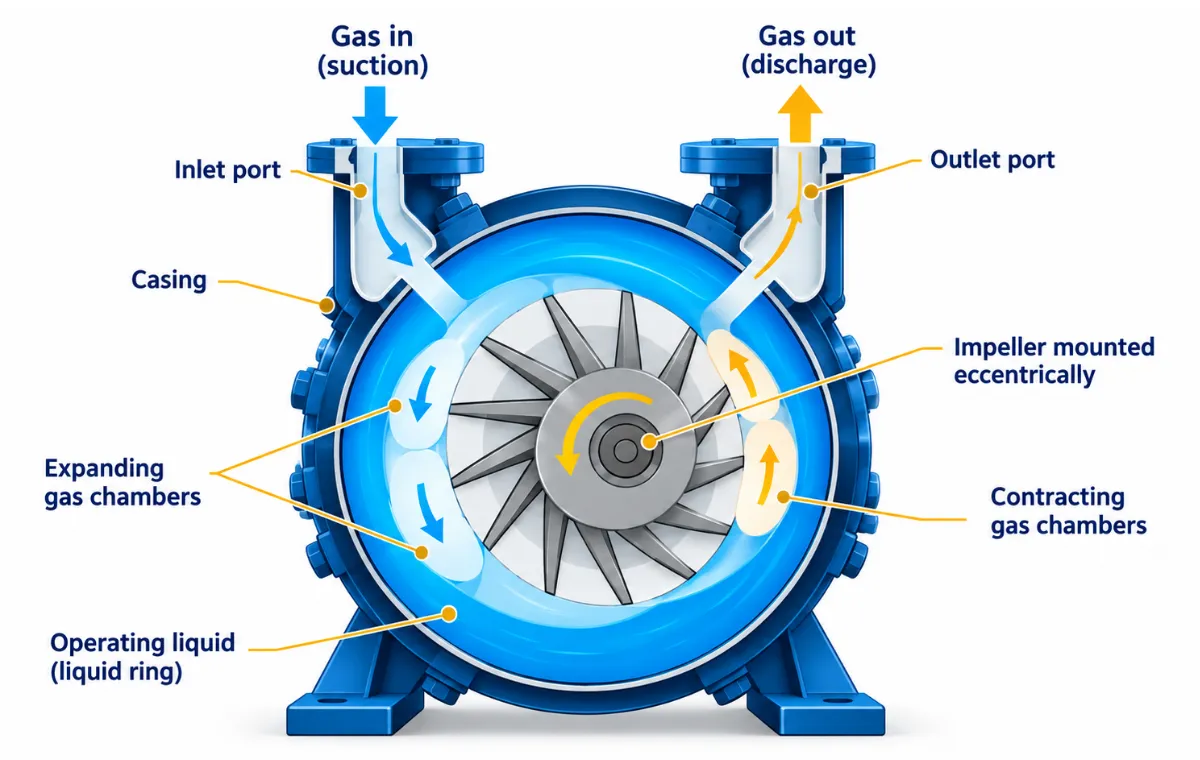
Liquid ring vacuum pumps use a rotating ring of operating liquid to create vacuum and move gases or vapours through the pump.
An impeller mounted eccentrically within the casing rotates in an operating liquid, commonly water. The liquid forms a ring against the casing wall, creating spaces between the impeller blades that expand and contract during rotation. These changing volumes enable gas intake, compression and discharge.
Three stages of operation
-
Liquid ring formation
The eccentrically mounted impeller rotates within the casing. Operating liquid forms a ring against the casing wall.
-
Gas intake
As the gas-filled spaces between the impeller blades and liquid ring increase in volume, gas enters through the suction port.
-
Compression and discharge
Continued rotation reduces the volume of the gas-filled spaces, compressing the gas before it leaves through the discharge port.
Why the operating liquid matters
The type, temperature and supply conditions of the operating liquid influence vacuum performance. These must be considered alongside gas composition, required vacuum level and operating duty.
Pump configurations
Single-stage vs two-stage liquid ring vacuum pumps
Liquid ring vacuum pumps are available in single-stage and two-stage configurations. The appropriate arrangement depends on the required vacuum level, gas load and operating conditions rather than the number of stages alone.
Single-stage liquid ring vacuum pumps
Gas is drawn into the pump, compressed and discharged through one compression stage. Single-stage configurations can be suitable for industrial vacuum duties where the required inlet pressure and gas load fall within the selected pump's operating range.
Selection consideration: Suitability for the specified vacuum level and required suction capacity.
Two-stage liquid ring vacuum pumps
Gas passes through a first compression stage before entering a second stage for further compression. Two-stage configurations may be considered where deeper vacuum requirements call for operation at lower absolute inlet pressures.
Selection consideration: Required inlet pressure, gas load and verified performance at the intended duty.
Required absolute inlet pressure, suction capacity, gas composition, operating-liquid temperature and system arrangement should all be considered. Final selection must be checked against the applicable manufacturer performance data.
Technology characteristics
What matters in liquid ring vacuum service
Liquid ring vacuum technology is used in industrial processes where gas characteristics, moisture and operating conditions influence equipment selection.
Understanding the operating liquid, process medium and wider vacuum system is essential when evaluating pump suitability. These considerations extend beyond the choice between single-stage and two-stage equipment.
-
Wet gases and condensable vapours
Liquid ring technology can be suitable for processes involving moisture, saturated gases and condensable vapours. The gas composition and extent of liquid carryover must still be assessed for the selected equipment.
-
Operating-liquid requirements
The liquid ring must be maintained using a suitable operating liquid. Liquid temperature, vapour pressure, supply conditions and compatibility influence achievable vacuum performance and system design.
-
Process and material compatibility
Process gases, vapours and operating liquids must be considered when specifying construction materials and sealing arrangements. Corrosion, temperature and chemical compatibility require application-specific review.
-
Vacuum-system integration
Equipment selection should account for operating-liquid supply, gas-liquid separation, discharge conditions and any proposed liquid recirculation arrangement. The complete vacuum system must be considered, not only the pump.
Spares & repair support
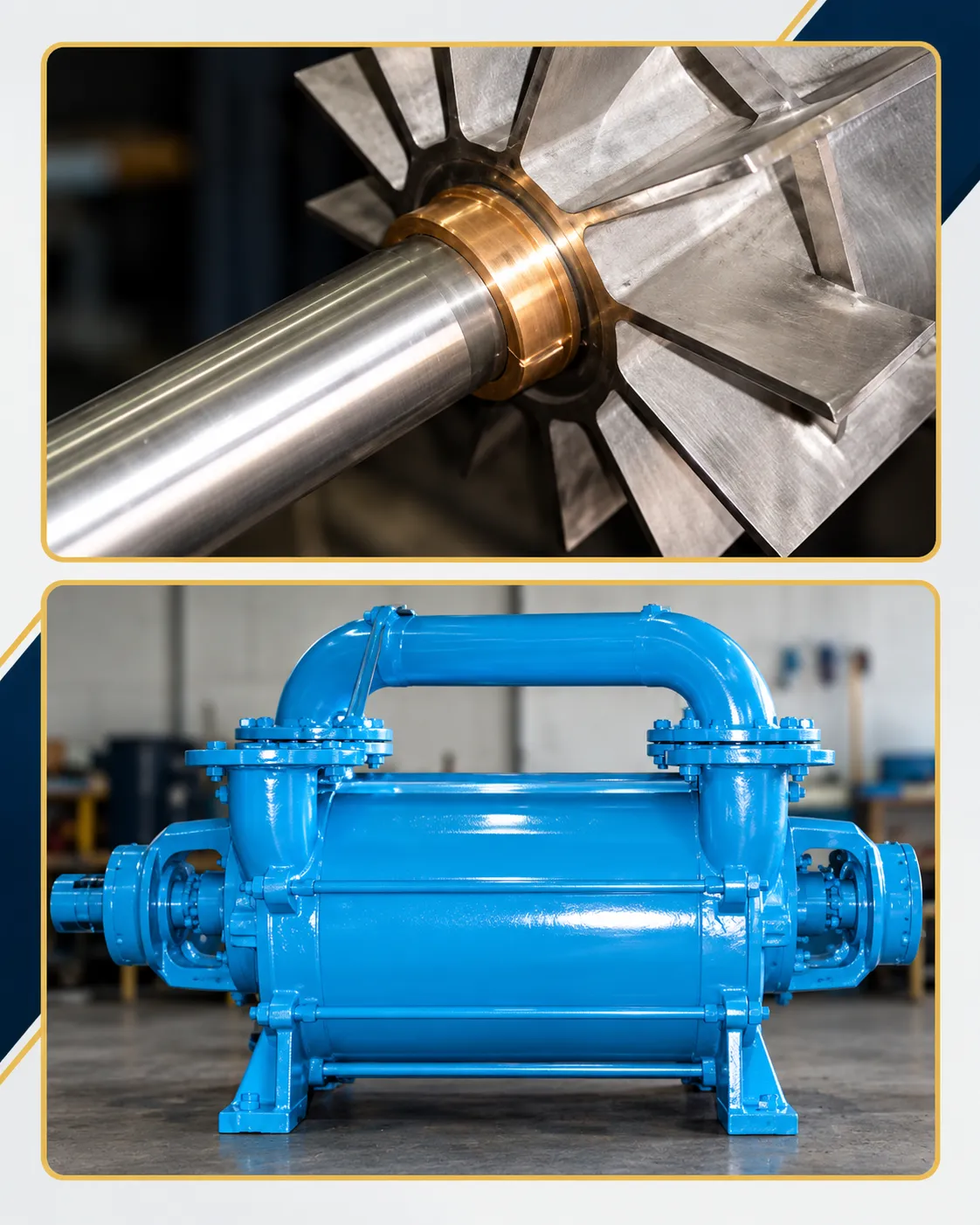
Vacuum pump spares, inspection and repair assessment
Effective maintenance decisions begin with an understanding of the equipment, its condition and its operating duty.
Process Containment Solutions (PCS) provides industrial pump repair capability and technical support for equipment requirements. Vacuum pump repair feasibility, component requirements and available support should be reviewed against the specific equipment and application.
-
Inspection and condition assessment
Equipment condition, reported symptoms, operating history and available failure evidence help determine what further assessment may be required.
-
Spare-parts identification
Component enquiries should include the pump manufacturer, model, serial number and available part references to establish compatibility and investigate availability.
-
Repair or replacement considerations
Repair decisions depend on the extent of damage, technical feasibility, component availability, equipment history and the cost of returning the pump to service.
Technical selection guidance
Selecting the right liquid ring vacuum pump
Vacuum pump selection should begin with the required operating duty, not simply the pump configuration.
Required vacuum level, gas load, process conditions and operating-liquid requirements all influence equipment suitability. Establishing these parameters helps determine which configuration and pump performance characteristics should be evaluated.
Preparing a technical enquiry?
Where available, provide the relevant process information and equipment documentation. For replacement requirements, include:
- Existing pump manufacturer, model and serial number.
- Available duty specifications, performance information or drawings.
- Details of the current operating requirements or equipment concerns.
Six factors to establish before selection
The following information helps define the application and identify the performance data required for equipment selection.
-
Vacuum level and gas load
Required absolute inlet pressure and suction gas flow at the specified operating conditions.
-
Gas and vapour characteristics
Gas composition, temperature, condensable vapours and potential liquid or particulate carryover.
-
Operating-liquid conditions
Available operating liquid, supply temperature, quality and proposed circulation arrangement.
-
Material compatibility
Chemical properties of the process medium and operating liquid, including potential corrosion or material compatibility concerns.
-
Operating profile
Continuous or intermittent duty, operating frequency and expected changes in process conditions.
-
Vacuum system arrangement
Discharge conditions, gas-liquid separation, operating-liquid recovery and other relevant system requirements.
Final selection: Pump suitability must be verified against the intended operating duty and the applicable manufacturer performance data. The appropriate configuration cannot be determined from any one parameter in isolation.
Technical consultation
Discuss your liquid ring vacuum pump requirement with PCS
Selecting new equipment or assessing an existing vacuum pump? Start with the application and operating duty.
PCS supports industrial buyers with product selection enquiries, equipment requirements and broader industrial pump repair capability. Providing the relevant operating information helps establish the appropriate technical considerations and next steps for your enquiry.
Connect with the PCS technical team
Whether you are evaluating a Titan liquid ring vacuum pump, considering replacement equipment or enquiring about an existing unit, provide the available equipment and process information for review.
- Application and required operating duty.
- Available vacuum and suction capacity requirements.
- Existing pump identification and operating history, where applicable.