
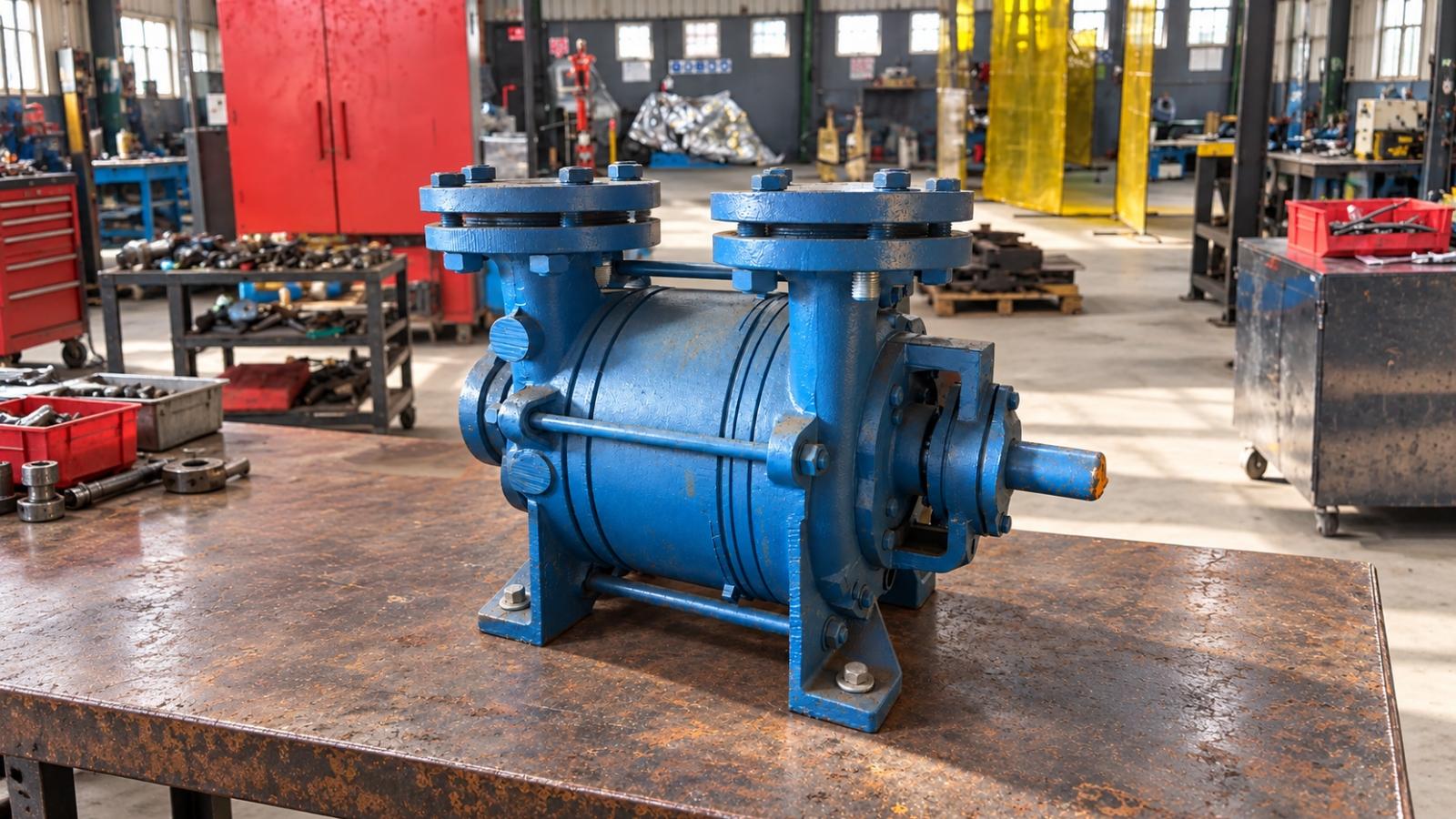
Understanding the operating conditions, system problems and equipment issues that can affect industrial vacuum performance.
A liquid ring vacuum pump may continue running while the process it supports gradually loses vacuum performance. In other cases, the change is sudden, with the system struggling to achieve or maintain its required operating pressure.
For maintenance and plant engineers, the immediate concern is often whether the pump has developed a mechanical fault. However, reduced vacuum performance does not necessarily indicate pump failure.
Service-liquid conditions, system leakage, changing process demands and internal component wear can all affect performance. Identifying the cause requires an understanding of both the pump and the wider vacuum system.
What Does a Loss of Vacuum Actually Indicate?
A liquid ring vacuum pump removes gases and vapours from a process system to establish and maintain pressure below atmospheric pressure.
When the system can no longer achieve its required vacuum, the measured absolute pressure is higher than intended.
This may occur because the pump’s effective gas-handling capacity has decreased, the gas load entering the system has increased, or operating conditions have changed.
It is also important to establish where the pressure change is occurring. A restriction between the process and the pump, for example, can result in different pressure readings at the process connection and pump inlet.
Understanding the relationship between suction pressure, gas load and operating conditions is therefore an important starting point.
Common Reasons a Liquid Ring Vacuum Pump Loses Performance
1. Elevated Service-Liquid Temperature
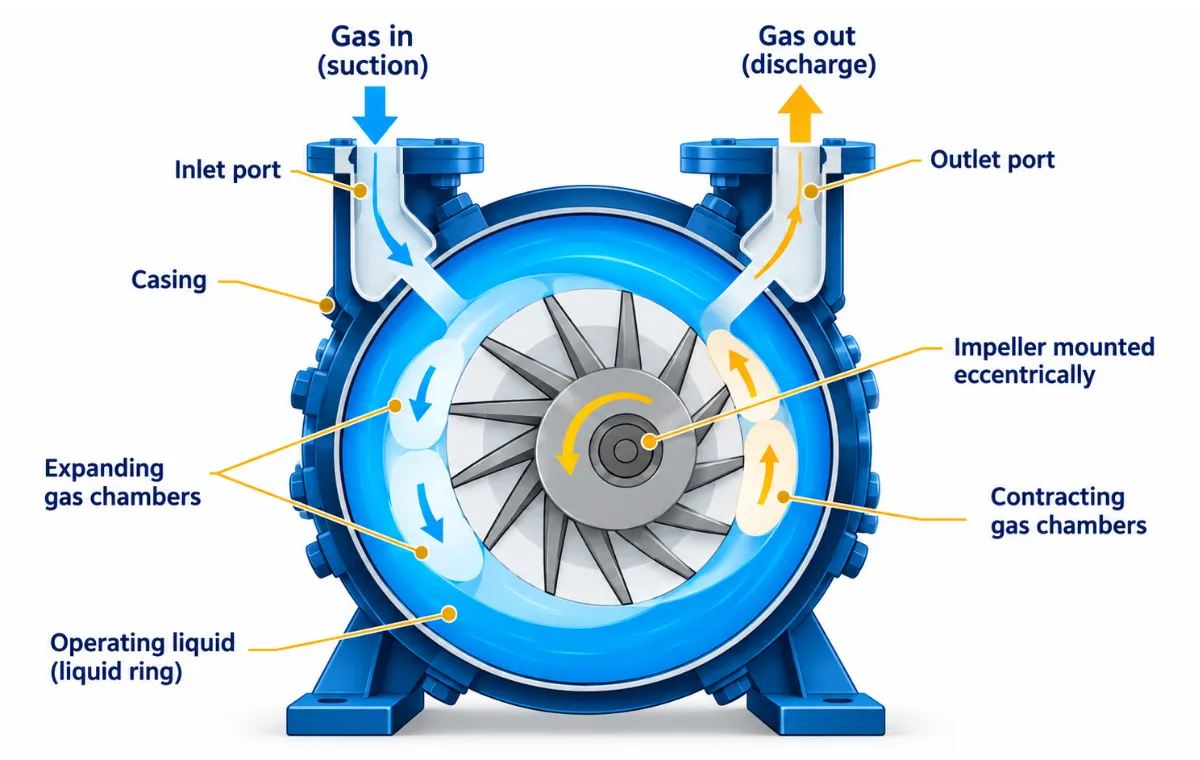
The service liquid is essential to liquid ring vacuum-pump operation. It forms the liquid ring, provides internal sealing and absorbs heat generated during gas compression.
Water is commonly used, although other compatible service liquids may be required for specific applications.
As service-liquid temperature increases, its vapour pressure rises. This can limit the lowest absolute suction pressure the pump can achieve and reduce effective gas-handling capacity, particularly at deeper vacuum levels.
In systems using recirculated service liquid, inadequate cooling or increased process heat loads may contribute to higher operating temperatures.
A pump that previously maintained the required vacuum may therefore experience reduced performance even when its mechanical condition remains unchanged.
2. Incorrect Service-Liquid Flow
A liquid ring vacuum pump requires an appropriate supply of service liquid to maintain effective operation.
Insufficient flow can affect liquid-ring formation, reduce pumping capacity and contribute to higher operating temperatures.
Possible contributing factors include restrictions in the liquid supply, changes in supply pressure, blocked passages or problems within the recirculation system.
Excessive service-liquid flow can also affect operation, depending on the pump design.
Service-liquid supply conditions should therefore be assessed against the equipment manufacturer’s requirements rather than adjusted without considering the operating duty.
3. Air Leakage or Increased Process Demand
A vacuum pump must remove the gases and vapours entering the system to maintain the required suction pressure.
If unwanted air enters through leaking connections, valves, seals or other parts of the system, the additional gas load may exceed the pump’s available capacity at the required pressure.
Changes in production conditions can have a similar effect.
Increased vapour generation, changes in process temperature or modifications to connected equipment may alter the duty expected from the vacuum pump.
This is particularly relevant when the pump appears to be operating normally, but the process can no longer maintain its required vacuum.
Before assuming internal pump failure, maintenance teams should consider whether the operating conditions or system requirements have changed.
4. Restrictions, Contamination or Discharge Conditions
Restrictions within the vacuum system can affect gas movement and the pressure achieved at different points in the process.
A partially obstructed inlet line or strainer, for example, can create a pressure difference between the process and the pump inlet.
Deposits, scaling and contamination may also interfere with service-liquid circulation or internal pump operation.
Depending on the system arrangement, excessive discharge backpressure or problems with associated separation equipment may further affect performance.
These conditions demonstrate why an assessment should consider the connected system rather than focusing exclusively on the pump itself.
5. Internal Wear, Damage or Cavitation
Reduced vacuum performance may also result from deterioration of the pump’s internal condition.
Component wear, corrosion, erosion or other mechanical damage can affect operating performance and may require further inspection.
Cavitation is another condition that warrants attention.
It occurs when local pressure within the pump falls below the vapour pressure of the service liquid, allowing vapour bubbles to form and subsequently collapse as pressure increases.
Depending on the severity and duration, cavitation can contribute to abnormal noise, vibration and internal component damage.
However, these symptoms alone do not confirm cavitation or establish the cause of reduced vacuum performance.
Persistent deterioration or recurring abnormal operating conditions may justify a more detailed assessment of the equipment.
What Your Vacuum Pump’s Operating Symptoms May Indicate
Changes in equipment behaviour can provide useful information, particularly when compared with established operating records.
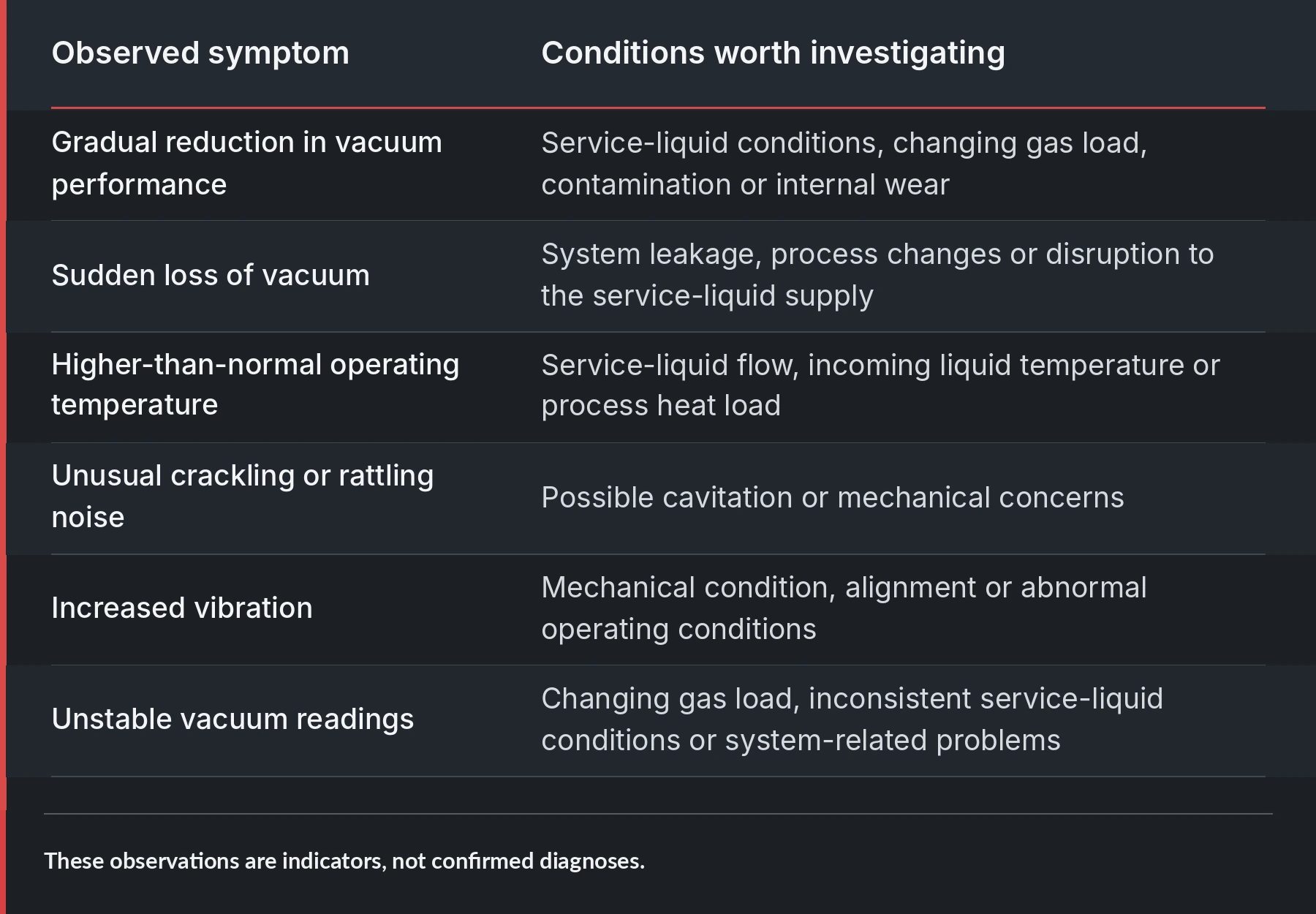
A single symptom may have several possible causes. Comparing changes in vacuum pressure, operating temperature, vibration, motor load and process conditions can provide a more useful basis for investigation.
What Should Be Checked Before Assuming the Pump Has Failed?
Effective fault investigation begins with reliable operating information.
Where records are available, current performance should be compared with readings taken when the equipment was operating satisfactorily under similar process conditions.
Useful information includes:
- Vacuum readings: Actual suction pressure, measurement location and changes over time.
- Service-liquid conditions: Inlet temperature, available flow information and relevant cooling or recirculation conditions.
- Process requirements: Gas or vapour characteristics, operating temperature, production demand and recent changes.
- Equipment behaviour: Unusual noise, vibration, temperature changes or changes in motor load.
- Operating configuration: Relevant valve positions, pump speed and drive or control settings, where applicable.
- Maintenance history: Previous repairs, component replacements, recurring problems and known system issues.
Pressure measurements should be interpreted correctly, distinguishing between absolute pressure and gauge vacuum readings.
Any equipment inspection or corrective work must follow the manufacturer’s instructions and applicable site safety procedures.
Collecting accurate operating information helps determine whether further system investigation, component inspection or pump assessment is appropriate.
When Should a Liquid Ring Vacuum Pump Be Considered for Repair?
Where performance remains below requirements, particularly when abnormal symptoms or evidence of damage are present, the pump’s mechanical condition may require further investigation.
An inspection can help establish the extent of wear or damage and inform the appropriate repair scope.
However, repair is not always the correct decision.
Equipment condition, operating duty, previous repair history, spare-part availability, technical feasibility and lifecycle cost should all be considered.
Where operating requirements have changed significantly, replacement equipment or an alternative pump configuration may also need consideration.
Process Containment Solutions (PCS) provides industrial pump repair capability, including repairs and spare-parts support for Titan and Flowserve vacuum pumps. Equipment identification, condition and operating history help establish the appropriate inspection and repair requirements.
PCS is an Approved Flowserve pump and mechanical seal repairer, supporting informed repair and maintenance decisions.
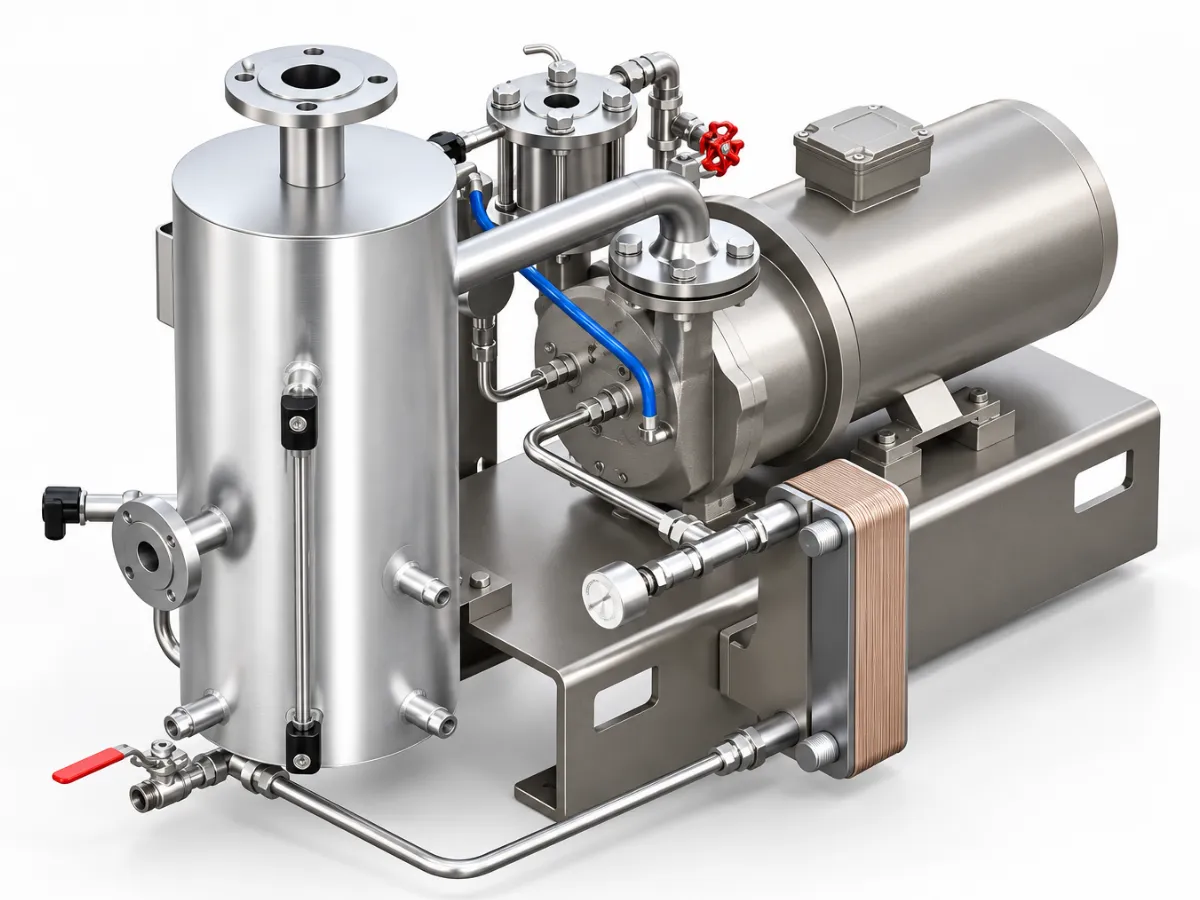
For new installations or replacement equipment, PCS supplies the Flowserve SIHI vacuum pump and engineered-system portfolio as an Authorised Flowserve Distributor within South Africa. The appropriate vacuum technology and equipment configuration should be selected according to the required duty, process conditions and system requirements.
Maintaining Vacuum Performance Starts With Understanding the Cause
Loss of vacuum performance should be investigated within the context of the complete operating system.
Service-liquid conditions, process demand, system leakage, restrictions and internal pump condition can all influence performance.
Establishing the cause before deciding on corrective action supports more informed maintenance, repair and replacement decisions.