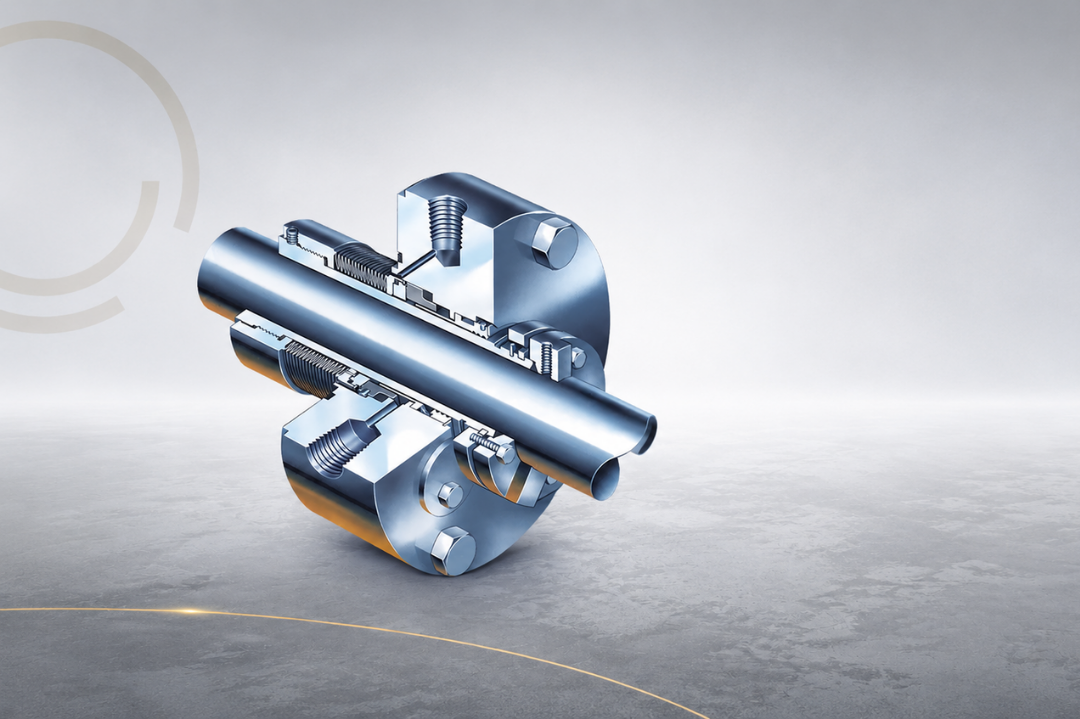
Flowserve BRC metal bellows seal cutaway used to illustrate severe-service mechanical seal technology for critical petrochemical pump applications.
In severe methanol service, mechanical seal reliability is not measured by short-term operation alone. It is measured by containment stability, repair interval performance and the ability of the sealing system to support critical pump duty over time. For petrochemical plants handling hazardous and demanding fluids, long-term reliability depends on more than the seal itself. It requires correct seal selection, disciplined repair and reconditioning, and evidence-based performance tracking.
As an authorised Flowserve distributor in South Africa, Process Containment Solutions (PCS) supports industrial clients with Flowserve pump and mechanical seal solutions designed to maintain reliability in demanding process environments.
Severe methanol service raises the reliability stakes
For maintenance teams, plant managers and procurement stakeholders, long-term seal reliability is about more than component life. It is about process containment, reduced repeat intervention and greater confidence in critical rotating equipment. That framing aligns closely with the way PCS already presents its technical content: practical insights on pump selection, seal performance and lifecycle reliability.
In methanol service, the sealing conversation becomes even more important. When the service fluid carries both flammability and toxicity hazards, maintaining containment over time is part of plant risk control, not just maintenance housekeeping. That is why a long-term reliability discussion is valuable to plant teams reviewing pump reconditioning, seal support and refurbishment strategy.
BRC metal bellows technology is built for severe petrochemical duty
The severe-service example behind this discussion is based on a Flowserve BRC metal bellows seal configuration. Flowserve describes the BRC Series as an edge-welded metal bellows design for severe services in refineries and hydrocarbon processing plants, and states that it is fully compliant with API 682 Type C requirements. Flowserve also highlights thick-plate Alloy 718 bellows convolutions for corrosion resistance, a canned-face design that supports low-leakage performance, and a steam-purge baffle on stationary configurations intended to reduce coking.
Those details matter because they show that this is not a general light-duty sealing arrangement. It is a seal family designed for demanding petrochemical environments, with a published operating temperature range from -73°C to 427°C, making it technically appropriate to discuss in the context of severe methanol duty.
MTBR trends tell a stronger story than one successful overhaul
According to PCS’s anonymised internal reliability records, the more important story is not one isolated repair success. It is the long-term MTBR trend over an extended service history. That gives technical and commercial stakeholders a more meaningful picture of application fit, repair discipline and operating stability over time.
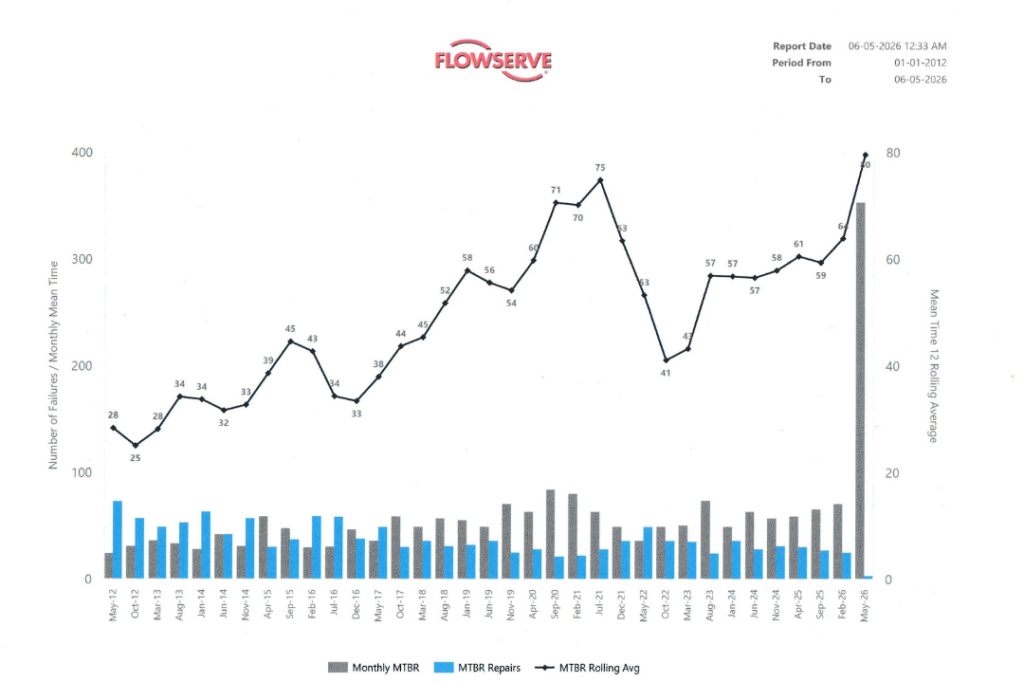
Figure 1: Anonymised MTBR rolling average trend for Flowserve-supported pump assets, recorded over the period January 2012 to May 2026. The data supports long-term reliability analysis without disclosing customer, plant or asset-specific information.
That approach is also consistent with the role of Flowstar.net, which Flowserve presents as a platform for tracking work orders, maintenance and configuration details in ways that improve processes and increase the reliability of business assets. In other words, long-term repair-interval history is exactly the kind of evidence that turns a seal discussion into a reliability discussion. As with MTBF-style reliability metrics more broadly, the key value is trend interpretation over time rather than treating a single figure as a guarantee.
Repair quality is part of seal reliability
Seal reliability does not stop at product selection. Long-term performance depends on how the seal and pump are inspected, repaired, reconditioned and returned to service. PCS’s repair process includes incoming inspection, dimensional and wear assessment, root-cause evaluation, bearing and seal inspection, controlled reassembly and functional testing before equipment is released back into operation.
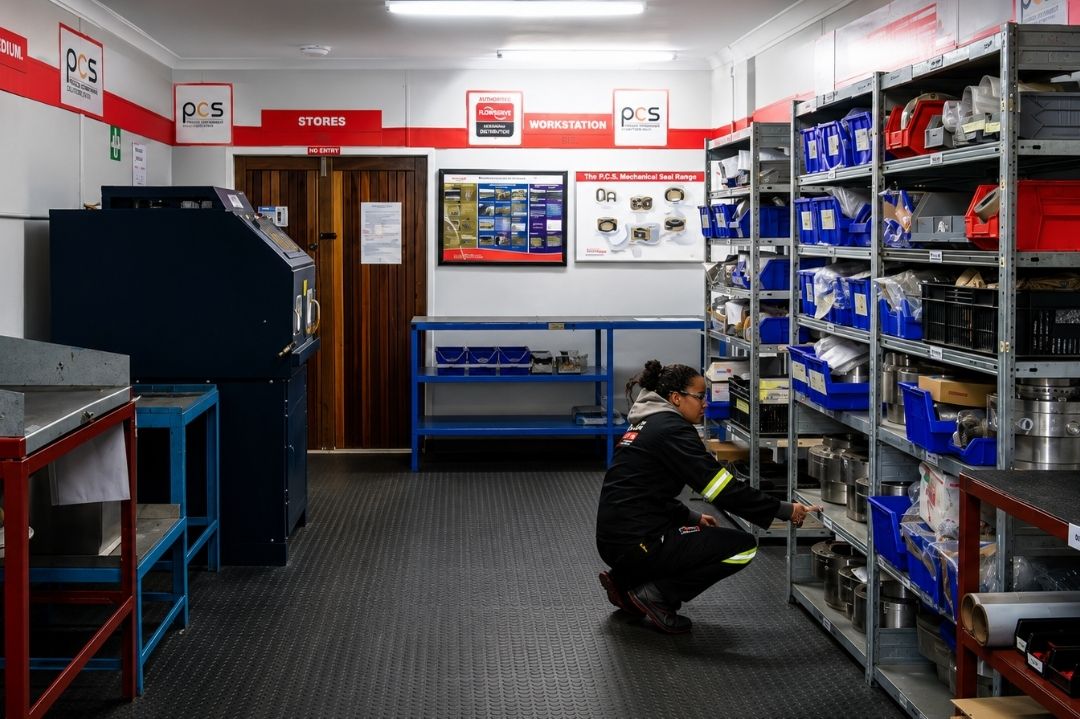
Inside the PCS workshop stores and inspection area, where organised parts management and disciplined inspection support efficient pump and mechanical seal repair operations.
That is an important point for plants reviewing reconditioning decisions. A good seal design can still underperform if the inspection, refurbishment and assembly process is poor. Conversely, when the seal selection is right and the repair discipline is controlled, the result is a much better chance of stable containment, predictable maintenance intervals and longer equipment life in service.
Local support matters when pumps are critical
The commercial value of this reliability story is not only in the seal itself. It is also in the quality of the local support behind it. PCS presents itself as a South Africa-based provider of engineered fluid control and process containment solutions, with approved Flowserve repair-facility credentials, mechanical-seal refurbishment capability, pump repair support and technical consultation across Southern Africa.
That matters because repair-versus-replace decisions are often driven by more than theory. PCS’s pump repair guidance specifically notes factors such as serviceable casings and components, wear-related performance loss, new-equipment lead times and lifecycle cost analysis. In practical terms, that means the right sealing strategy and the right reconditioning support can materially influence how quickly a plant returns equipment to reliable service.
Reliability is built over time
The practical lesson from severe methanol service is straightforward. Long-term seal reliability is rarely accidental. It comes from matching the right seal technology to the duty, protecting repair quality during refurbishment and tracking performance over time so that decisions are based on evidence rather than assumption.
If your plant is reviewing pump reconditioning, mechanical seal support or lifecycle reliability in demanding petrochemical duty, PCS can help assess service conditions, refurbishment scope and sealing strategy to support long-term performance.
____________________________________________
Reliable sealing starts with the right technical decision.
For plants operating in severe chemical or petrochemical duty, PCS provides Flowserve pump reconditioning, mechanical seal repair, failure assessment and application-specific sealing support.
Speak to PCS about your pump reliability challenges, seal repair requirements or refurbishment scope.