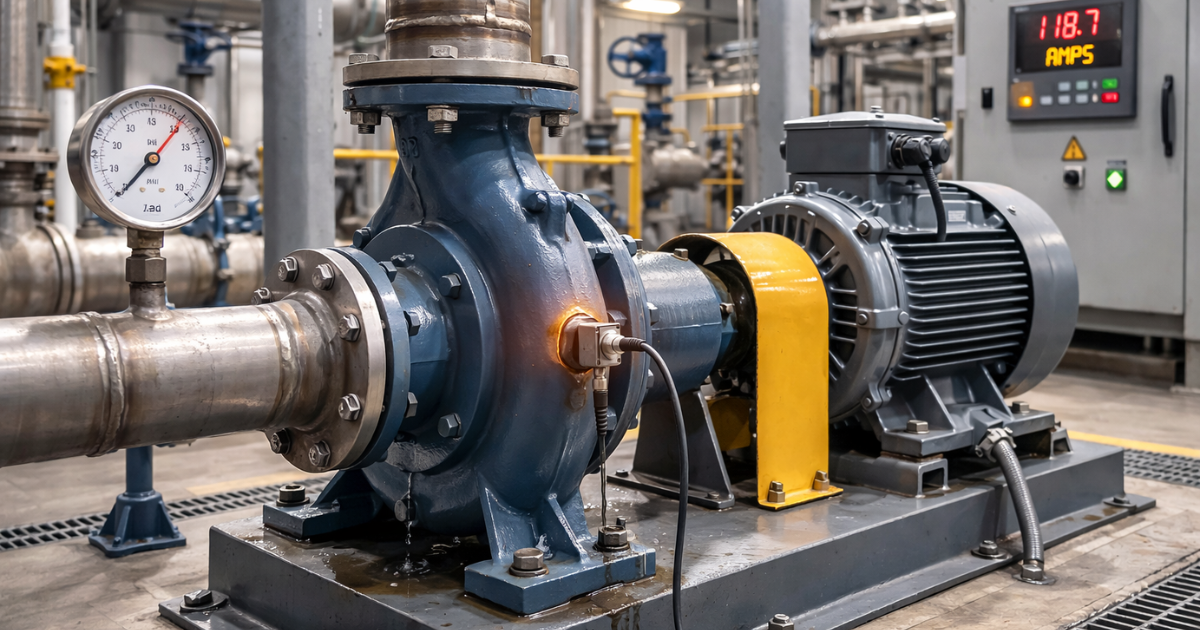
Industrial pump failure rarely happens without warning. In mining, petrochemical processing, water treatment, manufacturing, and power generation, pumps typically show measurable performance deviations before failure. The challenge is not whether warning signs exist, but whether they are recognised early enough to prevent costly downtime.
Below are 10 critical indicators that your industrial pump may be approaching failure, along with the practical actions maintenance teams should take.
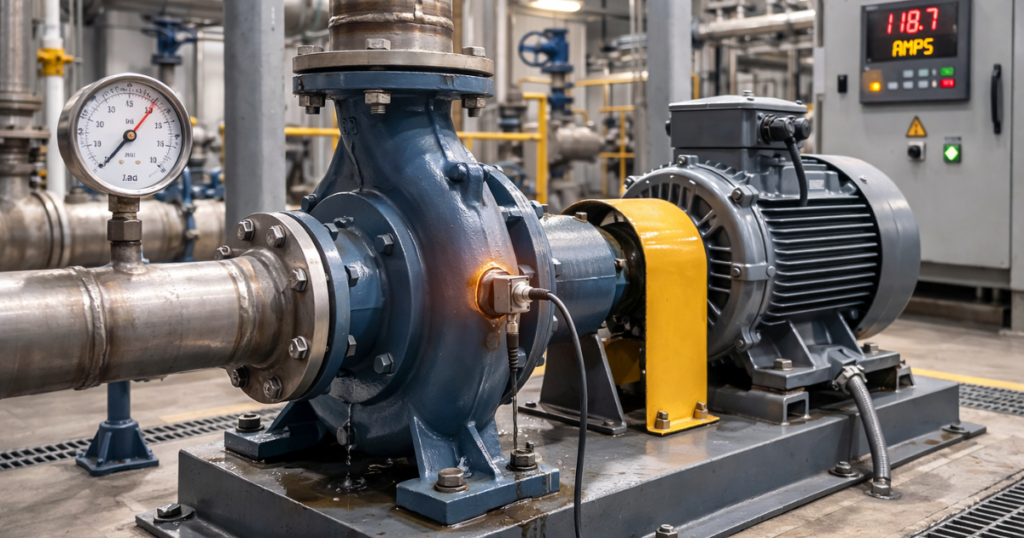
1. Increased Vibration Levels
Vibration is one of the earliest measurable signs of mechanical distress.
Possible causes:
- Bearing wear
- Shaft misalignment
- Imbalance
- Cavitation
- Mechanical looseness
What to do:
- Conduct vibration spectrum analysis
- Verify alignment using laser tools
- Inspect bearings and coupling condition
- Compare readings to baseline values
Routine vibration monitoring significantly improves early fault detection.
2. Unusual Noise
Grinding, rattling, or crackling sounds are not normal.
Common causes:
- Bearing damage
- Cavitation (gravel-like sound)
- Loose components
- Impeller damage
What to do:
- Inspect suction conditions
- Check bearing lubrication
- Perform an internal inspection if noise persists
Noise is often the first visible symptom operators notice.
3. Rising Bearing Temperature
Elevated bearing temperatures often indicate lubrication or positioning issues.
Possible causes:
- Over-lubrication or under-lubrication
- Contaminated lubricant
- Misalignment
- Excessive radial load
What to do:
- Verify lubrication type and interval
- Inspect alignment
- Examine for
- 3 excessive pipe strain
Temperature trending should form part of a structured reliability programme.
4. Frequent Seal Failures
Mechanical seal issues are a recurring failure point in process pumps.
Possible causes:
- Dry running
- Improper seal selection
- Pressure fluctuations
- Poor flush plan design
What to do:
- Verify seal compatibility with fluid
- Review operating pressure and temperature
- Confirm correct flush system operation
Repeated seal failures are usually a system issue, not a seal issue.
5. Reduced Flow or Pressure Output
When the pump output drops below expected levels, degradation is likely occurring.
Common causes:
- Impeller wear
- Internal recirculation
- Blocked suction
- Air ingress
What to do:
- Compare current performance to the pump curve
- Inspect the impeller condition
- Check suction line integrity
Performance monitoring prevents reactive replacement decisions.
6. Cavitation Damage
Cavitation creates pitting on impellers and increases vibration.
Indicators:
- Pitted impeller surfaces
- Fluctuating discharge pressure
- Crackling sound
What to do:
- Verify Net Positive Suction Head (NPSH) margin
- Remove suction restrictions
- Evaluate system design
Unresolved cavitation leads to accelerated component wear.
7. Motor Overload or High Amperage
If motor current draw increases without a process change, investigate immediately.
Possible causes:
- Hydraulic imbalance
- Increased system resistance
- Bearing drag
- Electrical issues
What to do:
- Measure motor load against nameplate rating
- Review system head and flow conditions
- Inspect mechanical components
Electrical anomalies frequently reflect mechanical inefficiencies.
8. Excessive Leakage
Visible leakage from seals, gaskets or casing joints indicates internal stress or wear.
Possible causes:
- Seal degradation
- O-ring failure
- Corrosion
- Pressure surges
What to do:
- Inspect sealing surfaces
- Verify operating pressure
- Check casing integrity
Leakage should never be normalised in critical process environments.
9. Frequent Tripping or Shutdowns
Unforeseen shutdowns suggest deeper reliability issues.
Potential causes:
- Overload conditions
- Electrical imbalance
- Thermal overload
- Mechanical seizure
What to do:
- Review fault logs
- Conduct root cause analysis
- Perform a full system assessment
Repeated trips increase operational risk and production losses.
10. Increasing Energy Consumption
Energy use trending upward without increased production constitutes a critical indicator.
Common causes:
- Operating off Best Efficiency Point (BEP)
- Internal wear
- Throttling losses
- Hydraulic inefficiency
What to do:
- Conduct a system performance review
- Evaluate pump sizing
- Consider ISO 14414-aligned energy assessment
Energy inefficiency is often an early sign of mechanical decline.
Why Early Detection Matters
Unplanned pump failures disrupt operations, increase maintenance costs, and pose safety risks. Proactive condition monitoring and structured reliability strategies improve:
- Mean Time Between Failures (MTBF)
- Energy efficiency
- Maintenance planning accuracy
- Lifecycle cost control
A data-driven approach reduces the need for emergency interventions and supports stable plant performance.
When to Engage Technical Support
If multiple warning signs appear simultaneously, a structured diagnostic assessment is recommended.
PCS provides:
- Vibration analysis
- Laser alignment
- Pump performance testing
- Seal and bearing inspections
- Root cause failure analysis
- Engineered repair and replacement solutions
Our approach focuses on preventing failure, not reacting to it.
Industrial pump failure is rarely sudden. The warning signs are measurable, visible, and actionable. Maintenance teams that monitor vibration, temperature, performance curves, and energy consumption are more likely to protect uptime and reduce lifecycle costs. If your plant is experiencing any of these indicators, early intervention will always cost less than emergency replacement.