
Pump replacements are high-impact decisions. They affect plant uptime, operational cost, energy efficiency, and extended reliability. Before removing and replacing a unit, maintenance supervisors should confirm whether replacement is the best choice or if a repair, redesign, or operational adjustment can achieve the same outcome at lower lifecycle cost.
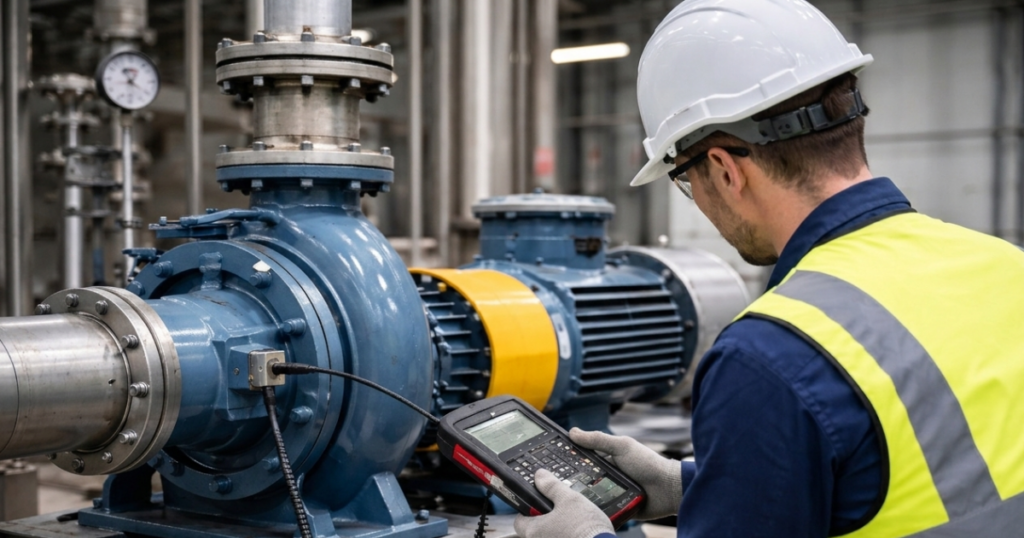
Here are the nine critical questions to ask before signing off on any pump replacement.
1. Has the root cause of the failure been confirmed?
Replacing a pump without understanding why it failed often leads to repeated breakdowns.
Check: vibration analysis, seal condition, lubrication issues, cavitation indicators, alignment history.
Check: vibration analysis, seal condition, lubrication issues, cavitation indicators, alignment history.
2. Is the current pump sized correctly for the duty point?
Oversized or undersized pumps lead to energy waste and premature wear.
Verify: actual flow, system head, operating curve, and whether the duty has changed over time.
Verify: actual flow, system head, operating curve, and whether the duty has changed over time.
3. Can the pump be economically repaired?
A repair may restore performance at a lower cost and with shorter lead time.
Consider: spares availability, wear part condition, repair vs replacement cost ratio.
Consider: spares availability, wear part condition, repair vs replacement cost ratio.
4. Is the existing pump still supported by the OEM?
If the model is discontinued or spares are difficult to source, replacement may be justified.
Evaluate: OEM documentation, local support, and future parts availability.
Evaluate: OEM documentation, local support, and future parts availability.
5. Is energy efficiency driving the replacement?
Modern hydraulic designs and improved motor technology can reduce power consumption.
Assess: expected efficiency gains vs capital expenditure.
Assess: expected efficiency gains vs capital expenditure.
6. Will the new pump integrate perfectly with existing piping and controls?
Unexpected modifications incur additional costs and downtime.
Confirm: footprint, nozzle orientation, baseplate requirements, motor compatibility, control logic.
Confirm: footprint, nozzle orientation, baseplate requirements, motor compatibility, control logic.
7. Have operational parameters changed since the original installation?
Changes in process fluids, pressure profiles, solids content, or temperatures may require a different pump type.
Check: process specifications, future duty plans and any system redesigns.
Check: process specifications, future duty plans and any system redesigns.
8. Do maintenance records show repeated problems?
Chronic failures may indicate a systemic issue rather than an isolated malfunction.
Review: seal replacement frequency, bearing failures, misalignment trends, and lubrication intervals.
Review: seal replacement frequency, bearing failures, misalignment trends, and lubrication intervals.
9. Will a reliability assessment or FMECA improve the decision?
A structured FMECA highlights risks, criticality and expected lifecycle impact.
Use: criticality scoring, failure effects, and extended reliability predictions to guide the decision.
Use: criticality scoring, failure effects, and extended reliability predictions to guide the decision.
Well-informed Decisions Protect Uptime
Approving a pump replacement should never be a tick-box exercise. By asking the right questions, maintenance supervisors ensure each judgment is guided by evidence, lifecycle cost, and operational performance, cutting downtime and improving plant reliability.
PCS provides technical assessments, pump diagnostics, repair services, and engineered replacements to support maintenance teams in making data-based decisions that protect production continuity.
Get In Touch
Tel: +27 (0)10 442 5798 | +27 (0)67 385 9590
Email: info@pcsza.com