An IEC/ISO-Aligned Look at Efficiency Losses in Industrial Pump Operations
Pumping systems are among the largest energy consumers in industrial plants. In sectors such as mining, petrochemical processing, water treatment and manufacturing, pumps can account for a significant portion of total electrical demand. Industry assessments and engineering studies show that many pumping systems operate well below optimal efficiency, with energy wastage estimated at 20–40% because of design, operational, and maintenance deficiencies.
This article explains where those losses occur, why they matter, and how engineering teams can correct them using internationally aligned methodologies such as ISO 14414 and IEC motor efficiency standards.
Where Energy Is Lost in Pumping Systems
1. Oversized Pumps
One of the most common efficiency issues is oversizing. Many plants run pumps away from their Best Efficiency Point (BEP), causing:
- Higher power draw
- Increased vibration
- Premature wear on seals and bearings
Impact: Significant energy loss over the pump’s lifecycle.
2. Throttling and Control Valve Losses
When flow is controlled by throttling instead of system optimisation:
- Pumps still consume full power.
- Excess pressure drops across valves
- Energy is dissipated as heat or turbulence.
Impact: Avoidable system resistance increases overall power consumption.
3. Inefficient Motors
Motors that do not meet IEC efficiency classes (IE3, IE4) consume more electricity for the same workload.
Impact: Even small efficiency drops compound over thousands of operating hours.
4. Poor Maintenance Practices
Typical contributors include:
- Worn impellers
- Clogged suction lines
- Misaligned shafts
- Degraded bearings due to improper lubrication
Impact: Deteriorated hydraulic performance forces the pump to draw more power than necessary.
5. Operating Outside the Designed Duty
Changes in process requirements over time mean pumps often operate at duty points for which they were not originally sized.
Impact: Reduced hydraulic efficiency and elevated energy cost per cubic metre pumped.
6. Pipework Design Issues
High friction losses from:
- Undersized piping
- Excess elbows, bends or fittings.
- Excess elbows, bends or fittings: Pump works harder to overcome avoidable system losses.
Why These Inefficiencies Add Up to 20 – 40% Energy Waste
Across industries, engineering assessments regularly highlight the same trend:
Most pumping systems operate well below optimal efficiency because they were never evaluated at the pump, motor, control, and pipework levels.
Most pumping systems operate well below optimal efficiency because they were never evaluated at the pump, motor, control, and pipework levels.
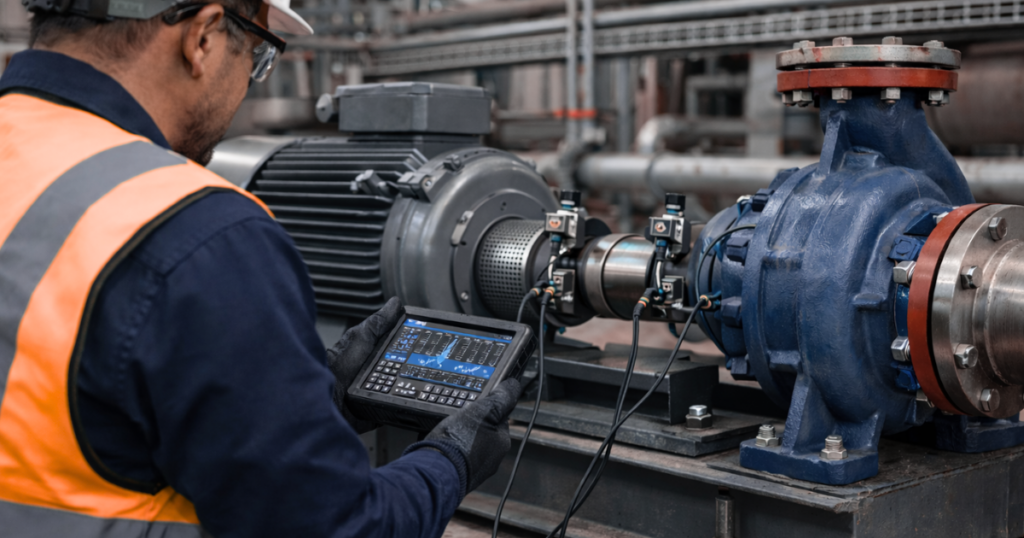
ISO 14414 delivers a structured methodology to perform pump system energy assessments, enabling plant engineers to quantify:
- Actual vs expected hydraulic efficiency
- Energy losses due to system resistance
- Motor and VSD contributions
- Lifecycle energy cost of each inefficiency
When applying these assessments, energy savings of 20% or more are common, and in extreme mismatch conditions, losses can approach or exceed 40%.
How to Fix It: Engineering-Driven Efficiency Improvements
1. Conduct an ISO 14414 Pump System Assessment
This standard provides a well-defined framework for:
- Flow and head measurements
- Efficiency benchmarking
- Identifying high-loss components
- Comparing repair vs replacement energy impacts
2. Optimise System Design Before Replacing Equipment
Significant improvements include:
- Correct pump sizing
- Reducing throttling by matching pump output to system demand
- Eliminating unnecessary pipe restrictions
- Redesigning suction lines for stable flow
3. Upgrade to IEC-Compliant High-Efficiency Motors
Motors rated IE3 or IE4 deliver measurable energy savings in long-duty-cycle applications, especially in continuous-operation plants.
4. Implement Variable Speed Drives (VSDs)
VSDs allow pumps to operate closer to their BEP by adjusting speed according to demand.
Benefits include:
- Lower energy consumption
- Reduced wear
- Improved control stability
5. Improve Maintenance Discipline
A structured maintenance strategy reduces hydraulic and mechanical losses:
- Laser alignment
- Regular impeller inspection
- Lubrication monitoring
- Suction line cleaning
- Vibration and condition monitoring
6. Replace Inefficient or Mismatched Pumps
When repair or optimisation cannot restore performance, a correctly sized replacement pump provides long-term efficiency and reliability.
Efficiency Is a Reliability Strategy
Energy waste in pumping systems is not simply an electrical cost issue; it is a reliability and lifecycle cost issue. By applying IEC motor standards, ISO 14414 energy assessments, and sound engineering practices, plants can reduce unnecessary energy consumption while improving pump uptime and extending asset life.
PCS supports industrial operations across Southern Africa with pump assessments, optimisation studies, repairs, motor evaluations, and engineered system upgrades to reduce energy waste and improve long-term system performance.